
God who comes and
Toots His Own Holy Horn,
where angels call
and the faces of earth's multitude turn Heavenward
with the crossed-fingered, hope of rising first,
with those desirous,
and who hold the ticket of their small faith,
of taking a trip on a cloud like a Disney ride,
to the Lord's Forever-Ever-Land,
...Bah! And boo, boo, boo!
You know the Plan.
No one goes until everybody goes.
The notion of The Elect, Your Holy Elect,
kills the least of these
over and over and over
again and again and again.
Speak plainly.
Mean the words of the mountaintop.
Stay with us.
Amen.
Salvation Story: The opening Act

Animated Sermon – June 7, 2020
Madeline Weaver, whiteboard artist
“Now a new king arose over Egypt, who did not know Joseph. He said to his people, Look, the Israelite people are more numerous and more powerful than we.” – Exodus 1:8-9
God, clother of Adam & Eve
God, designer of the mark written on Cain
God, gifter of the rainbow
God, appointer of Abraham
God, stayer of the hand of the slayer of son Isaac
God, chooser of Joseph,
God, creator of kings,
how can a newly created king not know of Joseph?
Shouldn't the lack of knowledge
turn people into blathering idiots
who only know how to follow and how to be slaves?
Why do idiocy and stupidity seem to always take
the thrones of condemnation and carelessness?
Do you, God, get some perverse pleasure
out of the rare instances where
powerlessness prevails over power?
Sure, the names of the powerlessness
ring across the history of humanity
but the names of those wiped away
with the wave of a hand by those in power
are more numerous
than grains of sand on Crescent Beach
and more numerous
than the countless stars in the universe
and, horrifically, forgotten.
God of upside down power and God of upended numbers,
the multitudes cry out, Save us!
Amen.
“The Ethiopian Eunuch”

In honor and in memory of George Floyd
Where to start? Start with a breath. God in. Peace out. Start with prayer. God, may the words of my mouth be spoken from my heart, filled with the knowledge and wisdom of my mind, carried by your Spirit with love and truth resounding. Amen.
Where to start? There is no denying on this Pentecost Sunday that the spirit of God is moving, rushing, burning, crying out, standing firm…weeping. To use the imagery of today’s scripture reading, people everywhere have come to the field of their lives only to find that there are no gleanings for them. They turn to the fringes and there is nothing there either.
Where to start? How about turn to the people? Where are you at? Let’s try some audience participation…see if we can span the fifteen second delay between my broadcast and your comments. Type the first words that come to your mind into the comments section in answer to the question: Where are you at? What are you feeling?
What am I feeling? Where am I at? The song “My Shot” from the musical Hamilton keeps ringing in my ears. The character John Laurens cries out,
“Rise up!
When you’re living on your knees,
You rise up.
Tell your brother that he’s gotta rise up.
Tell your sister that she’s gotta rise up.”
[In his notes from the libretto of Hamilton Lin-Manuel Miranda writes that “When you’re living on your knees / You rise up” was originally “Don’t this sh*t make my people wanna rise up!” which was a nod to a Busta Rhyme’s refrain.]
And then Miranda as Hamilton gets going:
“Scratch that,
This is not a moment, it’s the movement
Where all the hungriest brothers with something to prove went.
Foes oppose us, we take an honest stand,
We roll like Moses, claimin’ our promised land.
And? If we win our independence?
‘Zat a guarantee of freedom for our descendants?
Or will the blood we shed begin an endless
Cycle of vengeance and death with no defendants?
…
I’m past patiently waitin’. I’m passionately smashin’ every expectation,
Every action’s an act of creation!
Praise God for the prophets and the poets who breathe the very breath of the Spirit of God with each syllable they write and speak and sing!
Human beings are God-breathed. Pentecost is about being God-breathed. I imagine God forming adam, that first mud thing made from the dust of the ground. I imagine God turning this mud-thing around, gazing at it, wondering perhaps about what this mud-thing could be. And then God breathed into the nostrils of this mud-thing and the adam became a living, breathing human being. The very first time God’s breath enters into us. And then God places this living, breathing human being into a garden. A wonderful, color-full, rich, vibrant garden of delight, happiness and joy.
Now cover the garden with asphalt. Place a living, breathing human being onto the hard surface. Crushed, body crushed, face crushed into and on the hard rock with a knee on his neck. “I can’t breathe.” Our brother in Christ, George Floyd’s last words, “I can’t breathe.” A God-breathed, living human being whose last words were, “I can’t breathe.” No more blowing out of candles on a birthday cake for George Floyd.
Who was the very first Gentile convert to Christianity? I ask this because we have been wandering through the book of Acts to take glimpses of how the early church survived and then thrived in those times where followers of the Way of Christ all lived in their separate dwellings. I ask this also because we have been studying the book of Acts in our Bible study group and this coming Wednesday we get to read chapter 8 and hear about the Holy Spirit guiding Philip.
Philip goes to Samaria. Preaches. People follow. Simon the Magus believes and is particularly interested in receiving the Holy Spirit so that he has the power to dispense the Holy Spirit. Along comes Peter who sees Simon’s true intent and calls him out. “Your heart is not right before God.” In other words, you, Simon, are just in the game to exercise power and control. The way of power and control is not the way of God. The Holy Spirit cannot be controlled.
An angel tells Philip, “Head south. Go on the wilderness road.” So Philip gets up and goes. Now there was an Ethiopian eunuch, a court official for the queen of the Ethiopians on the wilderness road. The Spirit said to Philip, “Go over to this chariot and join with the one there.” The unnamed, Ethiopian eunuch is reading a passage of scripture from the prophet Isaiah. So Philip runs up to the man and asks him, “Do you understand what you are reading?” Now before I read these next few words of Isaiah’s that the eunuch was reading and puzzling over, I need to preface the words with some background.
In ancient Greek writing, and in the time of the Romans as well, there was, in the words of the biblical scholar, Ben Witherington, “considerable interest in Ethiopia and Ethiopians precisely because of their ethnic and racially distinctive features.” Homer wrote that the Ethiopians were the most distant of people. Witherington drawing on the work of other scholars writes, “Blackness and the Ethiopian were…in many respects synonymous….The Ethiopians’ blackness became proverbial….Ethiopians were the yardstick by which antiquity measured colored peoples.” Here, though, is the key that scholars of this time period have observed. “What is important to note is that, unlike the case in the West in the last [many] centuries, there is no evidence in antiquity of widespread prejudice against a particular people simply because of their color, or the combination of their color and distinctive ethnic features.”
Luke uses the Ethiopian eunuch as the representation of the gospel finally going to the very edges of the world. This man, this black man, living in the far flung fringe of the world, an alien AND a living, breathing human being becomes the…very…first…Gentile convert…to…Christianity. Philip hears the words of Isaiah that the black Ethiopian eunuch is reading. Philip helps him understand what he is reading and proclaims the good news about Jesus. The black Ethiopian eunuch is so excited when they come to some water he says, “Look, here is water! What is to prevent me from being baptized?” Nothing. And the black Ethiopian eunuch rejoices.
The first Gentile convert to the Christian faith. You would think there would be some honor attributed to the race of human beings who became the first of the Gentiles to have faith in the Way of Christ Jesus. One would think.
I close with the passage of scripture from Isaiah that the black Ethiopian eunuch was reading some two thousand years ago:
Like a sheep he was led to the slaughter,
and like a lamb silent before its shearer,
so he does not open his mouth.
In his humiliation justice was denied him.
Who can describe his generation?
For his life is taken away from earth.
Amen.
“…you shall count off seven weeks; they shall be complete.” Lev 23:15
God who counts the dust,
grains of sand and hairs on our heads,
the stars and our descendants,
your desire for perfect perfection,
seven times seven,
heartens and emboldens.
If
week after
week after
week after
week after
week after
week after
week
may be made complete in your eyes,
then
as this week moves towards its sabbath
count this week
as one week
complete.
Amen.
“They Will Carry You Out”
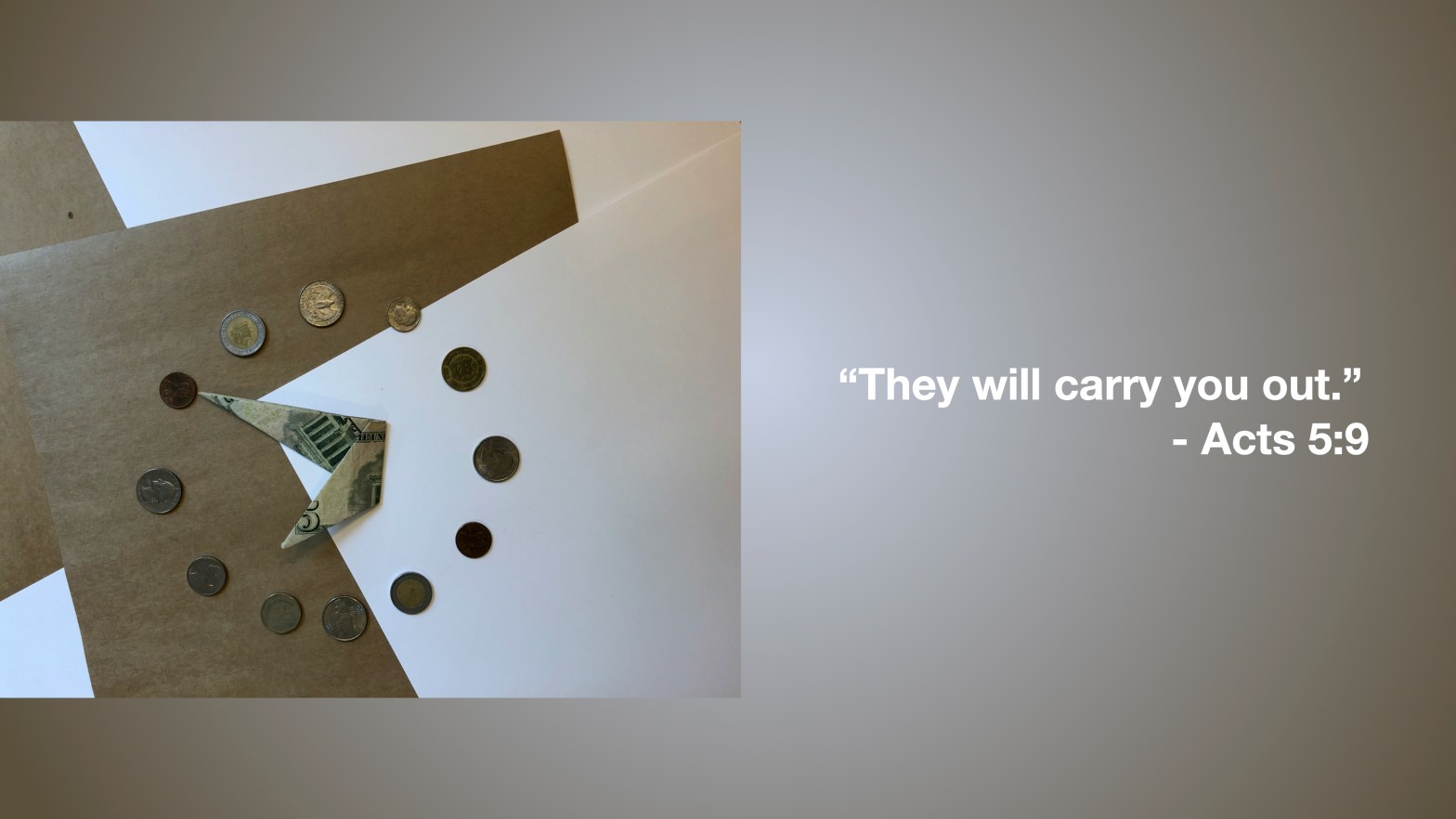
“They Will Carry You Out”
Scripture - Acts 5:1-11
Rev. Eric Brotheridge
I shall not be moved. Unless, of course, I knowingly, intentionally, deviously, unharmoniously, deceptively, selfishly, withhold a bit from the communal coffers. And, the God who sees all, will rip the very breath out of my body which will collapse to the ground, dead. And then I will be moved. Picked up. Wrapped up, carried out and buried by the nearest available young men. My partner in crime comes in three hours later. Rinse. Repeat. Two dead. And great fear seized the whole church and all who heard of these things. Who’s next to the altar? Hallelujah!
This past week I attended…online…the Festival of Homiletics. The Festival of Homiletics is the premier festival to learn about the art and craft of preaching. Attending lectures which made for some really good sermons and seeing sermons which made for some pretty dull lectures. But, for the most part, outstanding preaching. And I heard over the past five afternoons, “Honor the text.” Honor the text. In other words, give the scripture reading its due. Anchor the text in its historical and cultural setting.
Luke wrote today’s reading in the latter third of the first century. He writes about the time period right after Jesus was crucified and resurrected, maybe year 35 of the common era or after the birth of Christ. The reader has been told time and time again in the first few chapters of Acts that the church was of one mind and all together. Just prior to Ananias and Sapphira’s skullduggery we learn of a foreigner, Barnabas, who sold a field that belonged to him and laid all the proceeds at the apostles’ feet.
Honor the text. Research additional sources for other interpretations to get a sense if your own interpretation is in the ballpark. Check. Ananias and Sapphira knowingly withhold some money from the proceeds THEY lay at the apostles’ feet. Somehow Peter knows whats going on. He calls them out. First Ananias. Then Sapphira. God takes care of the rest. Ananias and Sapphira breathe out their entire life force and expire. How’s that for a euphemism? But, wait, I’m showing my hand.
Honor the text. Maybe Ananias and Sapphira didn’t really steal and thus lie to the Holy Spirit. Kept back. Translated from the Greek enosphisato. Hmm. Scholars pretty much agree it basically means skullduggery or embezzlement. No doubt. They lied. Death penalty. Instant. No chance for explanation. Do not pass go. Your jail cell is waiting for you to take your eternal rest.
Honor the text. I’ll take the advice of the church father Augustine who said if the plain sense of the scripture reading doesn’t make sense then maybe something else is going on.
Where do I start? Maybe the story is symbolic. Luke uses the same word enosphisato that is used in the Greek translation of the book of Joshua. That author tells the tale of how the tribes of Israel had just entered the promised land after the walls of Jericho came tumbling down. A character named Achan, against God’s command to not pillage, saw in the plunder “a beautiful robe from Babylonia (he checked the label), two hundred shekels of silver and a bar of gold weighing fifty shekels.” Joshua calls him out. Achan is stoned by the people and buried under the very stones that killed him.
Honor the text. So Luke is mirroring the early church with the early entrance of the Israelites into the Promised Land. And just as the entrance into the Promised Land is tainted by deception so is the beginning of the beloved community tainted by deception. And God will not have it. Okay. That satisfies. NOT. Because Ananias and Sapphira are still without breath, dead, by the will of God.
Honor the text. Many other commentators notice the parallels between the first couple of Acts and the first couple of Genesis. This is interesting. Both couples get into trouble. Interestingly, where Genesis shows us a he said/she said pointing of fingers before God, Luke has the interrogation occur individually. But that’s where the similarity between the couples’ stories ends. And, unlike Adam and Eve, Ananias and Sapphira are dead. The first couple is treated far better in Genesis by God. Sure the snake is cursed to slither and Eve’s pain is increased in childbirth…but remember, the Lord God made garments of skins for the man and for his wife and clothed them before sending them east of Eden.
Some might be saying that I am making a mountain out of a molehill. Move on. The point is that the unity of the early church was threatened. The virus, excuse me, Ananias and Sapphira were dealt with. Life goes on.
NO! The unity of the early church may be the point because that is what the early church would like us to focus on but the fact remains: Ananias and Sapphira are still dead. And, let me be honest, anyone who thinks Ananias and Sapphira got what was coming to them does not read the same gospels that I read. And this is why I get so upset with the glossing over of this story and the “it happens” of these two person’s deaths.
Again, I am not denying their lying. But guess what? I would suggest that their sin is but the mildest of horrors that unfolds in this scripture.
Horror number one. They are given no opportunity for an explanation or for repentance. How’s this for a trail? “Ananias,” Peter asked, “why has Satan filled your heart to lie to the Holy Spirit and to keep back part of the proceeds of the land? While it remained unsold, did it not remain your own? And after it was sold, were not the proceeds at your disposal? How is it that you have contrived this deed in your heart? You did not lie to us but to God!” Sapphira gets slightly better. Peter said to her, “Tell me whether you and your husband sold the land for such and such a price.” And she said, “Yes, that was the price.” Then Peter said to her, “How is it that you have agreed together to put the Spirit of the Lord to the test? Look, the feet of those who have buried your husband are at the door, and they will carry you out.”
“You did not lie to us but to God!” “Look, the feet of those who have buried your husband are at the door, and they will carry you out.” Is it any wonder Ananias and Sapphira died immediately? Not from the horror of their skullduggery but from the horror of how they were treated? How they were treated by the early church? Sure, they thought they could pull a fast one – haven’t we all at one or two times in our own lives? – but they realized real quick that the early church pulled an even faster one on them.
And the horror continues…Who removes the bodies? The young men. The next generation of leaders. What are they learning from Peter, the current leader of the church, and from the other apostles? Peter, so hard to get rid of that part of you that denies and denies and denies. People seem to die when you deny the very humanity of who someone is, Peter.
And the horror continues…And great fear seized the whole church and all who heard of these things. A leader who denies and ignores the humanity right in front of him, cultivating another generation of followers who dispose of the dead bodies and a people in fear and awe of the whole mess. For two thousand years this has been the model of church for so many people. An acceptance of death and creating fear is no way to be church.
It is time for some good news. I know there are some of my listeners who grew up in the fear of the Lord and have had the courage to die to that way of faith. It is not easy. I know there are others hungry to hear the good news of unconditional love. Perhaps holding a little bit back, for whatever reason, knowing that if all of you did show up at a particular church you would be shown the door faster than the exhalation of your last breath. Just like the church two thousand years ago. Just like much of the church for two thousand more years. We are in an interesting time. An intersecting time. Where old ways fade away. And room for the possibility of new interpretations, new metaphors and new ways of seeing and believing ways to be created. A new way. A Way that serves life.
They will carry you out. Wrapped in a burial linen? Or, imagine, young men, young women, young people carrying you out on their shoulders into new life.
“The young men came and wrapped up his body, then carried him out and buried him.” – Acts 5:6
God of all ages,
God of the child who
Jesus takes into his arms
declaring,
"Whoever welcomes one such child in my name welcomes me,"
why, then, do Jesus' followers
watch, teach and ask that child
to become a young human that
wraps up dead bodies,
carries dead bodies,
and buries dead bodies,
bodies created by the church?
I am done watching bodies
wrapped up, carried out and buried in the ground,
out of sight,
out of mind.
Too many young children
have grown up to be dead bodies.
Too many young children
have grown up to kill alive bodies.
God, the Bodies of Christs
need more than just "Enough!"
to be carried into Life!
Amen.
“Commencement Tidbits & Fruits”
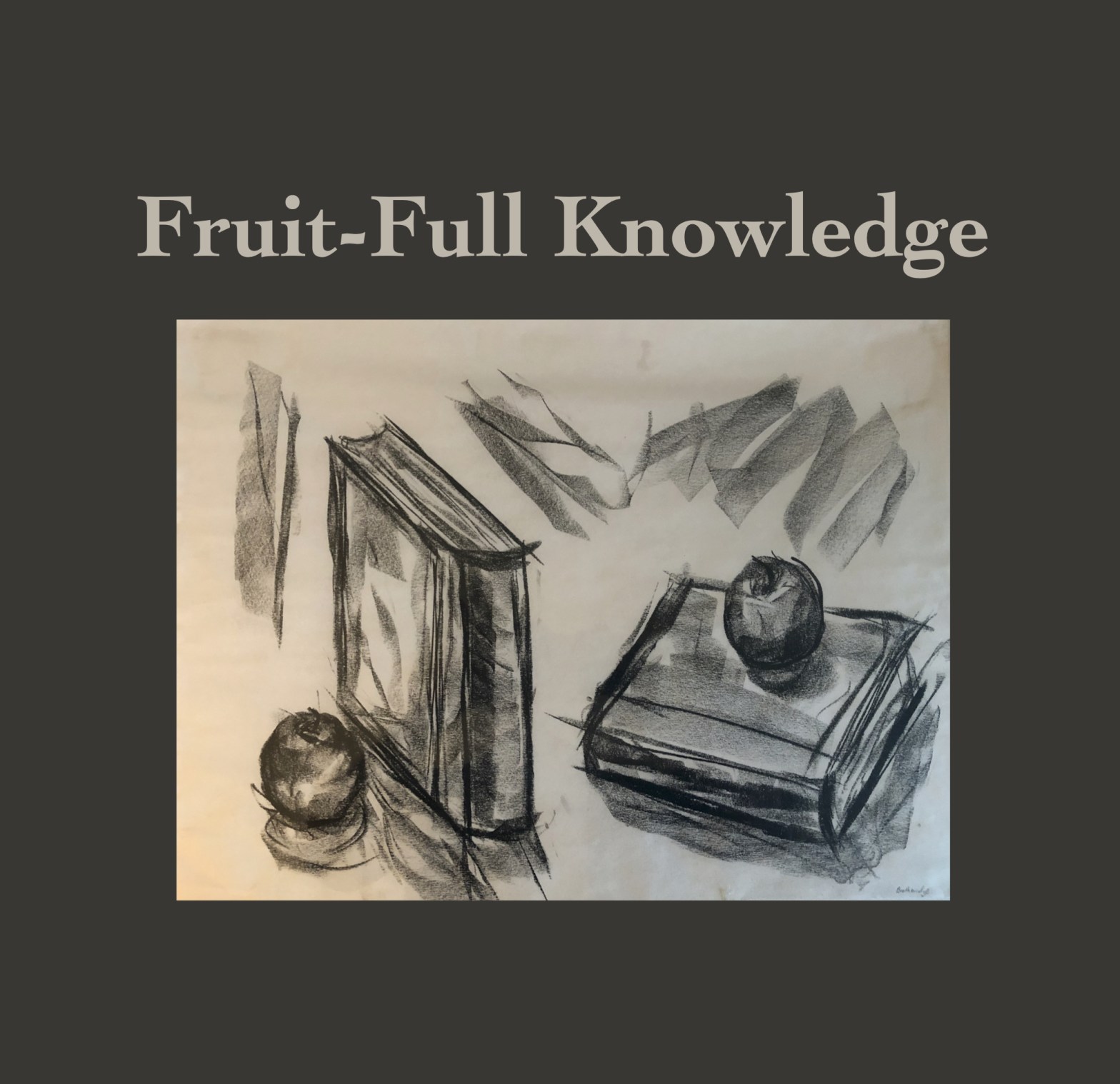
Graduation Sunday gives me the opportunity to combine all those sermons that I want to preach - each with a different message - into ONE sermon by condensing each into a commencement one-liner..

So here it goes...Call it "Commencement Tidbits & Fruits"

My advice to graduates:

Read the Sermon on the Mount. You will find there the keys to creating, bearing and producing good fruit.

In that sermon Jesus does NOT give a 10-point address playing off the 10 commandments. No. Instead, Jesus gives us the Big Three:  Love your neighbor/enemy.  Do not fear. Do not judge.

I hope by now that you have learned that the education of your mind continues with a willingness to continually change your mind.

There is a difference between knowledge and wisdom. Paradoxically, wisdom begins when you know you know nothing.“Question everything” is great advice.  Just don't forget to question yourself and continue to improve the quality of your self-questioning.  Remember Socrates.  "The unexamined life is not worth living."

Be CREATIVE!  Be like God.  The Bible OPENS with God creating for 6 days!  It's a not-so-subtle-hint that maybe god-like life can be found in being creative.

Remember: Anesthetic - while good for surgery - is the opposite of aesthetic. Avoid dullness.

Creativity comes in everything. The sciences, accounting, sports, relationships, work and play.

Learn one art form.  Create beauty.

Jesus never talked about beauty much.  I wonder why?  Maybe because God did all the talking that was necessary about creating and beauty, saying six times, "It is good."

Learn a foreign language.There is an Irish saying - A land without a language is a land without a soul.  Be articulate.  Learn to love language in all its varieties.  I never got an A in English or an A in German. I dislike writing though I love to read.

Learn to love words and the Word imbued in all words that makes words glow.

Speaking of land.  Pay attention to those who draw the boundaries.  Typically boundaries are meant to confine, limit, and control. Choose the torn Temple curtain over the Temple structure every time.

Pay attention to those who name!  Naming is control.

Be like Jesus who went to the other side of the river where people with funny names lived.

The poet Padraig O'Tauma, says, "Look for the virtuous plural over the monolithic singular."  In other words, it is easy to run with your own crowd.  Be like Forrest Gump.  Run on your own and if a crowd follows, wonderful.  And when you are done running, stop, and say, "I'm tired."  And do something else.

Engage those on the periphery of your social circle.  I think what helped me more than anything in high school is I made an effort to fit in with the jocks, the brains, the socialites, the music geeks, the ordinaries, the druggies.  It helped that youth of each of these cliques was in my fantastic church youth group.  I do have one regret: I never hung with the guys and gals in shop class.  I am just now changing my own oil.

So, in honor of those shop guys and girls...Change your own oil.  Scripture never tells of Jesus using QuikLube for anything.  Seriously.  Jesus did his own praying.  Jesus broke his own bread.  Jesus gave his own life.

It's your life.  Not anybody else's.  The great poet and playwright, Oscar Wilde wrote, "Be yourself.  Everyone else is already taken."

Life is not fair.  It's unjust.  Pandemics come out of nowhere.  Daughters die.  Nations fall.  Be like Jesus who said don't bother reading any signs into or out of these kinds of events.  Don't fret about conspiracies.  Better yet, create your own conspiracy: Be like Jesus.

Oh...and Jesus never, never, NEVER said, It happened for a reason; whatever "It" may be.  Jesus DID say, the Reign of God is in your midst.  My daughter committed suicide despite being in Africa, a beautiful and soaring place that she loved...doing the science that she loved after graduating with a degree in neuroscience from IU.  She still took her own life.  Here's what I know, what I know with all my heart, my soul, my strength and my mind: the Reign of God is present.  I am in the midst of the reign of God.

Problems, the BIG problems are very rarely created by particular people.  Paul never mentions "them" or the "other" or "Caesar" or "That Group" by name.  He doesn't call out CEO's or fake scientists.  Never.  He labels those forces as "Powers & Principalities."  Learn about the Powers & Principalities.

Interestingly, when you see the Powers & Principalities you will encounter Satan.  Jesus graduated from his school and spent 40 days in the wilderness.  Guess who came to pay him a visit.  Here's Satan!  "Okay, Jesus, you have a very fine lineage.  A call unlike anything the world has ever seen.  More advantages than most with your education.  Go on.  Feed yourself.  Turn these stones into bread.  Throw yourself off the top of the Temple.  People will be impressed.  Pay homage to the Powers & Principalities.  And the world is yours."  Seductive, isn't it?

Instead of giving credence to the saying, "The world is your oyster," make yourself a pearl for the world.

As you continue to recognize and see and name the Powers & Principalities AND how YOU, like all of us, participate in them, you will find yourself wanting to do your utmost for the least of these whom the Powers & Principalities run roughshod over time and time and time again.

Pronoun usage.  Limit the use of “they” and “them.”  Be humble when you use “me”, “myself”, and “I”.  Be extra cautious when saying, “we” and “us”.  Jesus takes an abstract argument between two of his followers about "Which one is the greatest?" with both followers declaring, “Me, me, ME,” and makes the argument real with a human being, a child.

You benefit from hundreds and hundreds of years of exploitation.  Our ancestors wiped out the North American natives who were here when we came.  We used natives of another continent to do the difficult work.  We used natives of ANOTHER continent to build our way west.  We are currently using natives of another continent to work while we stay at home.  Do a little bit to un-exploit.

NEVER let your self-worth depend upon tearing another person or another group down for you are worthy in and of yourself.I hope you did well in anatomy.  Know your brain.  The evolutionary process started with your nervous system which is designed to move reflexively.  Fight or flight.  Too often humans react out of the next part of our brain that developed as we evolved, the reptilian brain.  Not too long ago I was reminded by my oldest daughter of a story of another daughter who saw her dad get angry at another person.  She asked him, "Daddy, who were you being?"  Let your anger teach you to not be angry because, guess what, the need for anger pretty much left when the asteroid came and wiped out the dinosaurs.

The next part of the brain to develop was that social-mammalian brain.  All of those connections between neurons to figure out how to be and act in the midst of a bunch of other social animals.  The power of the alpha male still thrives in our human world.  Jesus was aware of this.  Caesar is not the head of the family.  God is.  The person with the most-est and best-est will not be first-est in the Reign of God.  You want to be first and hang with that alpha male? Good luck.  But if you want to be first in the Reign of God, be with the last of these.

Learn to appreciate and even embrace conflict.  Those arguing disciples.  At the end of a day after their journey Jesus sits down and asks them, "What were you arguing about on the way?"  He wants to know about the conflict because all great leaders know that conflict happens because people argue about what they care about.  Conflict illuminates care.

Loss is a part of life.  You have just lost your high school years.  You have just lost your collegiate days.  Learning to live with and in loss is soul-work.  Loss is at the center of each and every moment of life.  Just as possibility is at the center of each and every moment of life.  It's the way of Creation.  Day One done.  On to Day Two...

Speaking of daily...Say "Thank you" at least once a day.

Volunteer ONE hour a week.

Don't be a sport spectator.  Play a sport.

No words of wisdom are complete without some financial advice.  Give 10% of your money away.  Or more.  Save 10% of your money for tomorrow.  Save 10% for your retirement.  Save 10% for your descendants.  Pay your taxes and give to Caesar what is Caesar's.  And live off the rest.

Take trips.  Hopefully here soon we can all go on trips again. Go see the U.S. Holocaust Museum.  Shout into the Grand Canyon.  Stand on the Rialto Bridge over the Grand Canal in Venice, Italy.  (Did you know that the word quarantine started in Venice 700 years ago in response to the Black Plague?)  Visit ruins.  Visit lots and lots of ruins.  Learn about the civilizations that our civilization is physically built upon.  Learn that our civilization will be ruins for future civilizations to gawk at and to study.  Stand in the Sun Temple at Macchu Picchu on the Summer Solstice.  See a giraffe in the natural habitat of a giraffe.  Visit slums.  Dine with the rich.  Eat with the poor.

Read Bill Gates' Blog.  Pick one brilliant person who is alive today.  Put yourself at her or his feet and continue to learn.

What's the point of this sermon of tidbits and fruits?  What's the point of the Sermon on the Mount?  What's the point of being a tree that bears good fruit?

The answer, the point of bearing good fruit, can be found in what Jesus does first after he comes down from the Mount. When Jesus had come down from the mountain, there was a leper who came to him and knelt before him, saying, “Lord, if you choose, you can make me whole.”

Here's the Good News: Jesus stretched out his hand and touched him, saying, “I do choose. Be made whole!”
“A good tree cannot bear bad fruit, nor can a bad tree bear good fruit. Every tree that does not bear good fruit is cut down and thrown into the fire.” Matthew 7:18-19
Creator of all trees,
who declared after the forest was complete,
"It is good!"
whence bad fruit?
Yes, we will die
from eating the fruit of the tree of knowledge
but we need all the knowledge we can get on this day
and we need to "Get into the forest again" as Lawrence wrote
because we are dropping like gorged flies
from the bad fruit scattered and strewn
wantonly and recklessly upon the ground.
Amen.
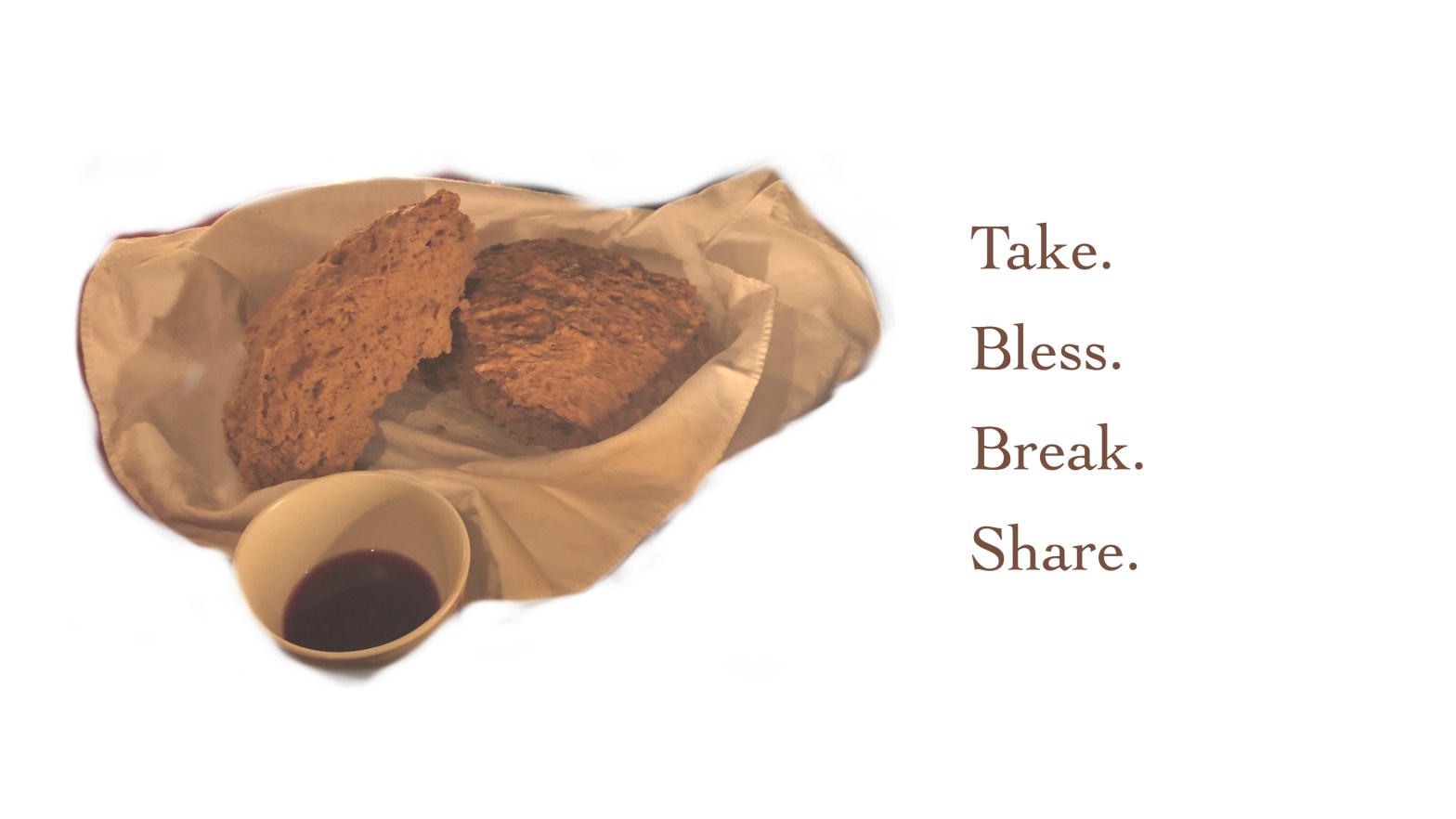
Not a Needy Person Among Them
I have always been a fan of delicious, post-apocalyptic stories and movies.  My earliest memory of this fascination is watching the movie The Omega Man where Charlton Heston is the last person alive after injecting himself with an experimental vaccine during a world-ending plague.  Sound familiar?  I cried at the end when Dr. Neville, Heston, was pierced by a spear thrown by the ugly, infected zombie leader.  But that act of sharing his life, literally sharing his life, allowed a ragged few to escape into a new future.

We all know the basic premise of the post-apocalyptic genre:  Bad, infected people spend the entire story taking any life that remains so they can enjoy living a few more moments.  Good, "normal", people end up giving or sharing their life for the sake of redemption and assuring the safety of the remaining few.  Sometimes its the good who are walled off in compounds trying to protect themselves from the forces of chaos that run around - or drive around like in the movie The Road Warrior starring Mel Gibson.  Sometimes the BAD people are the ones holed up in randomly constructed fortresses that a good Midwestern storm would disintegrate in a few minutes and the good people are simply trying to get by on a farm in the woods.

And then there is Cormac McCarthy's Pulitzer Prize winning novel The Road which winds itself between all sorts of genre-bending scenes as a father seeks to save a son.  Since reading the book back in 2006 and watching the movie that stars Vigo Mortenson, I never view a grocery cart now as simply a grocery cart.

I mention post-apocalyptic stuff because there are people today that view this pandemic as indicative of the end of the world.  The sky is falling, cries Chicken Little.  The end is near! cries a local billboard.  And, perhaps Kurt Vonnegut is on to something when he writes, "Let us be perfectly frank for a change.  For practically everybody, the end of the world can't come soon enough."

And this is true for the earliest Christian community.  For those early followers of Christ it wasn't a wish for the end of the world.  They truly believed that the end of the world was going to happen within their lifetime.  The earliest writing in scripture is Paul's letter to the the church in Thessaloniki where he soothes his readers, Don't worry.  We who are alive will rise with the return of Christ.  Is it any wonder that that first group of Christians shared all their stuff?  They truly felt that they didn't need it.  No pension plan required.

Times change.  I imagine it wasn't too much later when they realized they were in this thing called Life for the long haul.  Pension plan required.

We, though, some 66 generations later CAN learn from the example of the church in today's scripture reading.  They structured their household economy based on their perception of how they should best use their resources given their beliefs.  It is no different for us today.  In the study Resurrection Now, Richard Rohr states, that our theology is best understood by how we spend our money and our time.  Not by what we profess but by what we spend our time with and what we spend our money on.  Look around.  What do you see?  How is what you see around you a reflection of what you believe?  Where do you spend your money?  Thanks to EFT, electronic funds transfer, I don't have to see what I spend my money on; except for my discretionary use of my debit card.  Sure, I see contributions of my time and money to serve others.  Outside a roof over my head and food for my belly much of my spending is on aesthetic goods; goods that are beautiful and stir my creativity as a human being.

Regardless of whether or not you consider this pandemic the end of the world, I hope that you can affirm with me that the structure of our household economies significantly contributed to the mess were in.  We cannot go back to spending our money in the same ways.  We cannot go back to giving our time and attention to our same pursuits.  A pandemic is like the weather.  The wind blows and the weaknesses of a structure are illuminated and made known.

We could do what I'll call a Re-burying of Our Heads in the Sand.  WE can hope and pray and yearn for the same-old-same-old with everything open as it should be as if there will be a world without end.  We can.  But then we wouldn't be heeding the call of Jesus Christ to "Keep awake!"  Maybe the early church was really on to something.  Truly believing and living your life and re-ordering your priorities as if the world IS going to end at any moment.  Foolish?  Perhaps.  But isn't a bit of foolishness...and certainly a change of the ways that brought us to our current mess...worth a risk for that reward here on earth.  There was not a needy person among them.
 A Thread You Follow